

Coverage
- 85% of total premiums written across the U.S. 100M+ records.
- Vehicle-level data available for several states.
- New data will be added as we expand to additional states.
Timeframe
- Depending on the state, 5 – 20 years of historical crash data.
- Continuous updates to capture changes over time.
Data Refreshing
- Lag: New data arrives with a 1 – 12 month delay.
- Refresh frequency varies by state and data source.
Geographic Coverage

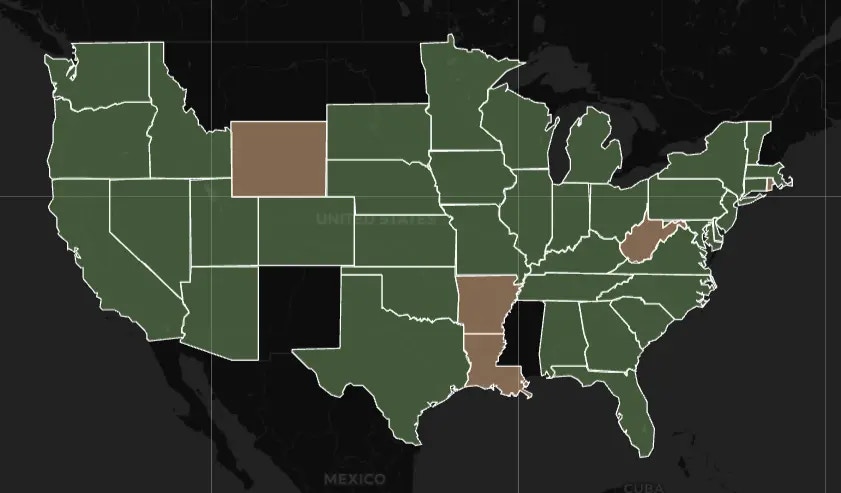
- Finished: Green states are fully onboarded with historical data. - Launching Q2 2025: Peach states will be available soon.
Crash Data Lifecycle
The lifecycle of crash data involves multiple steps to ensure completeness, accuracy, and standardization.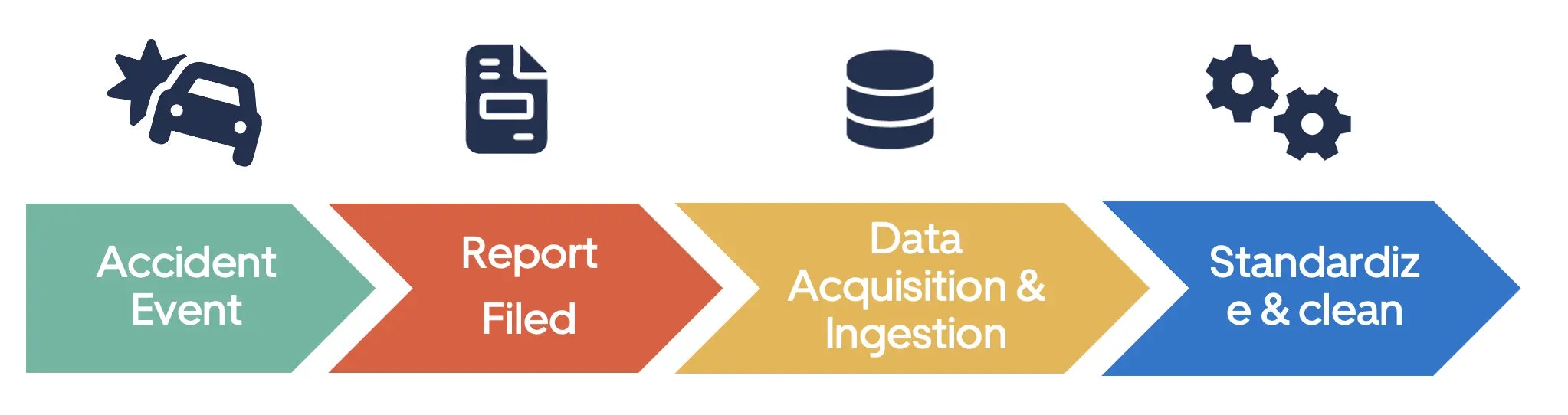
-
Accident Event:
A crash occurs and is reported to local or state authorities. -
Report Filed:
Police or involved parties file detailed reports documenting the crash. We do not collect crashes that are not reported to authorities. -
Data Acquisition & Ingestion:
We collect and ingest the reports from various state agencies, municipalities, and other sources. -
Standardize & Clean:
Data is normalized and cleaned to ensure consistency across sources for easier analysis and API integration.
Data Dictionary
We curate two specialized datasets, outlined below, to capture critical insights from crash events and vehicle involvement. These datasets, combined with other sources, power our advanced risk models.- Crash Data Overview
- Vehicle Level Data
Provides a broad view of each crash event, offering insight into crash circumstances, location, and outcomes.